Showing posts with label Wikipedia. Show all posts

Friday, May 4, 2018

Wikipedia Trails: Kali to Deportation...

Kali: I started with Kali because I just finished learning about her secret from the 7 Secrets of the Goddesses Youtube videos. I liked looking at how she is worshiped differently in different places, especially her maternal form in the Bangali tradition.

The Caravans- Gypsy camp near Arles
Van Gogh painting (1888)
Sourc: Wikipedia
Saint Sarah: There are scholars who claim that this French catholic saint is in fact a form of Kali worship in the western world, brought to France by the Romani. I'm not sure this is true as the Romani seemed to adopt her as their patron saint after she was in France and she is Egyptian. But it is interesting to think how religions can mix so easily and blur lines.

Romani: The Romani people have always fascinated because when I was kid they would be mentioned in books, and I never understood who exactly they are (Where do they come from? What religion are they? Where are they now?). I always thought they were from Eastern Europe (Romani, Romania/Rome, not so crazy), so imagine my surprise to learn they are originally from India! I should have done more research on this a long time ago...

Deportation of Roma migrants from France: France enforced deportation of Romani people in just 2009! Less than a decade ago France is still trying to stop the flow of Romani people entering the country. I think it's amazing how we don't hear about this, and I associate discrimination against Romani a fixture of the 19th century and before in France and ending with the Holocaust.


Sunday, April 29, 2018

Wikipedia Trails: Grief to Illusion of Control

Let me apologize now. This is probably the strangest and most depressing way to start a Wikipedia Trail. I think I am starting from a non-traditional place. I chose to start with grief because of several reasons:

1. Last night I was driving, and I got the sudden urge to call my grandpa. I got my phone out, pulled up the phone application, got ready to hit his number, but then had to remind myself he's gone. It's been almost a year since he passed and I still have moments like this.
2. I read Erika's Famous Last Words post talking about how she wrote an essay for another class inspired by her relationship with her great-grandmother and her hymnal.
3. I am sitting at a Panera, and a man walked in and sat right in front of me. He looks exactly like my grandpa, and having to sit in front of this man is making my heart ache.
4. In both the Mythology and Folklore and Indian Epics classes, I have read many stories about grief. It is such a powerful emotion that inspires so many storytellers.

So yeah, this is depressing. But going into this assignment, this is what I wanted to learn more about.


Source: Wikipedia
Grief: What I found most interesting about this post is how it discussed that while crying is a very common response to bereavement and sign of grief, there are other ways and are referred to as "coping ugly". It also mentioned that there are five different identities people fall into when grieving: nomads, seekers, memorialists, normalizers, and activists. The article most often mentions George Bonanno and his research, so he must be a leading researcher on grief and bereavement.

Self-Serving Bias: This is one of the "coping ugly" reactions mentioned as a response to grieving. It means that someone believes everything good that happens to them is due to their own merit, but bad things are due to external factors (I get good grades because I'm smart, I get bad grades because that teacher can't teach and that one hates me and that one etc etc.). It didn't explicitly say how this looks in relation to grief, but I imagine it as "I had this person in my life because I'm so good and kind, but I lost him/her because the world is out to get me/God is out to get me/I'm the universe's target."

Optimism Bias:  This was listed as something to look into further at the end of the article. Like how the title sounds, it is the cognitive bias which leads someone to believe that bad things won't happen to them or that good things will happen to them. I think that many or most people have this. Almost everyone always thinks many times "but that won't happen to me".

Illusions of Control: A positive illusion that causes people to believe that they have control over things they couldn't such as gambling. Researchers believe this is adaptive as it is more common in mentally healthy individuals. This is something I believe I had when my grandpa was suffering from ALS. I would often think "if I pray hard enough, if I visit more often, if I think about it more or less, he will get better". It was an absolutely mentally exhausting and horrible experience. The best freedom came when I mostly understood ALS had nothing to do with any of us and we couldn't affect it neither positively nor negatively.

Monday, April 23, 2018

Wikipedia Trails: Elephants to Maneka Sanjay Gandhi

Elephants: After reading the jataka of the Great Elephant, I was curious as to traditional beliefs towards elephants as this story depicts the elephant as extremely kind, wise, and caring for humans. What I learned is that elephants have been important in the history of India such as in war. In the Buddhist story of Gautama Buddha's mother, Maya, she dreamt she would give birth to an elephant, and the interpretation was that the child would be great. So elephants were obviously seen as important and great, a positive symbol. 

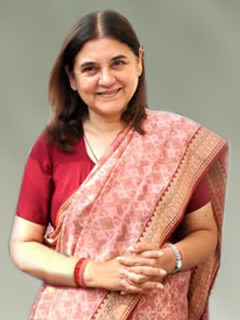
Maneka-Gandhi.jpg
Maneka Sanjay Gandhi
Source: Wikipedia
Prevention of Cruelty to Animals Act: In 1960, India's Parliament passed a law to stop cruelty to animals. It was particularly rumored that working elephants were subjected to abuse. This however does not exclude killing animals if for a religious purpose. 

People for Animals Uttarakhand: This organization was founded in 1992 with the goal of protecting animals from cruel abuses. They have inspected many different cases and pushed for stronger restrictions such as animal birth control on breeding dogs. They had a case where a visually impaired elephant was forced to work commercial rides, so sad!

Maneka Sanjay Gandhi: Maneka Gandhi is a political animal rights activist in India She has been a part of the Indian government since the 90's and was married to a politician who died in 1980. She is an animal rights activist and also fights for children and women, though she has been criticized recently for some gender-biased comments. 

Monday, April 16, 2018

Wikipedia Trail: Draupadi to President of the Qurorum of the Twelve Apostles

Draupadi: Before revising and posting my Draupadi story to my portfolio, I wanted to double check Draupadi's story and get a good overall picture of her legacy. Something I found interesting was how the wikipedia article mentioned how at the time, ployandry was controversial, and her marriage to multiple men was not without some uncomfortable feelings on the contemporary readers' part.

Polyandry: I had never thought about women having multiple husbands and it being a separate issue. I never even knew there was a specific word for it! i just thought it was polygamy and it usually worked out where it was a man who had multiple wives! Across the world, while polygyny (men with multiple wives) is frequently found, ployandry is hardly ever acceptable (as of 1980).

Brigham Young by Charles William Carter.jpg
Brigham Young,
Former President of the Quorum
of the Twelve Apostles
Source: Wikipedia
1890 Manifesto: I think many Americans are like me, and when we think of polygamy we almost immediately associate it with Mormons. However, this article mentioned religious attitudes towards polygamy and polyandry and mentioned how the 1890 Manifesto was supposed to end polygamous marriages (so that Utah could become a state). However, it does say that while it fell out of vogue over time, there are Mormon fundamentalists today who still believe the manifesto was not revelation as the church claims.

President of the Quorum of the Twelve Apostles: This a priesthood mentioned in the article about the 1890 Manifesto because the president at the time believed that the 1890 Manifesto was a sign the Second Coming of Jesus was eminent and that polygamy would be reinstated after he came. I am just surprised that there is a priesthood in the LDS church! Whoever is president is next in line to become president of the entire church, which I think sounds so much like a mix between a monarchical state and the popes.

Sunday, April 8, 2018

Wikipedia Trails: Lakshmi to Simeon Stylites

Lakshmi: I chose to start with Lakshmi because I noticed that for two separate stories for two separate reasons, I had used Lakshmi as my image. Her images always show such a beautiful elegant goddess and so I wanted to read a summary of why she is important as a Hindu deity.

Jainism: Lakshmi's article said that she is also an important goddess in Jainism. While I had heard of Jainism during my Intro to Asian Philosophy religion, I can't remember much about it now three years later. The article says that the main difference between Hinduism and Jainism is that the self is finite in Jainism.

Asceticism: Jainism has a strong ascetic tradition, and I wanted to learn more about this lifestyle. This means abstaining from material or physical pleasure. This can be either natural or unnatural asceticism. I thought it was interesting that unnatural asceticism includes self-harm and physical pain.

Icon of Simeon Stylites
Source: Wikipedia
Simeon Stylites: I wanted to learn more about those who practiced unnatural asceticism which included self-inflicted pain to understand why they would do this. The article only specified one person who used self-inflicted pain and it was the Christian monk Simeon Stylites. He deprived himself of food and water often, and when he was sought out by so many for counsel, he sat a top a pillar so as not to be bothered and have time for devotion.


Monday, February 26, 2018

Wikipedia Trail: from Swayamvara to Euphrosyne


When reviewing what happened in the Part A of the Mahabharata, I came across this word, Swayamvara. I wasn't sure what it was so I looked it up!

Swayamvara
A ceremony in which a woman chooses her husband from a list of suitors. It's interesting that a woman had the final say in her husband at this time in history!

Bride-show
This term was listed in the See Also section of the article. This ceremony is the complete opposite of the swayamvara. In this case the women are paraded around and the man chooses his bride. It made me think of the way VeggieTales portrayed the choosing of Esther as the bride for the king of Persia.

Maria of Amnia
On the article for bride-shows, it had a short list of See Also articles. Of those, I was familiar with two (Book of Esther and Beuaty Pageants), but completely unfamiliar with Maria of Amnia. I had never heard of her, but she is apparently one of the most famous examples of a bride-show woman. She was empress consort of the Byzantine Empire. Reading about her life, highlighted by the fact that she was chosen out of a bride-show, it is apparent how sadly passive she was in her life. Chosen by others, divorced by her husband, sent away, and becoming a nun. Though she was empress of one of the largest empires in history, her death date isn't recorded! This was the sad reality of women of her time. So far from the Indian culture and their swayamvaras!

Euphrosyne
In Maria of Amnia's article, it mentioned how her daughter,
Euphrosyne, was taken from the convent, against Maria's
protestations. I wondered what happened to her after she was taken from her mother and forced to be empress consort, a position her mother had held and was ejected from. She seemed somewhat more empowered than her mother, but after her husband died, returned to a convent to lead out a more quiet life. The great irony is that while her mother was chosen from a bride-show to begin a miserably passive life, Euphrosyne held a bride-show for her stepson!

Compare these two photos. One depicts a Swayamvara while the other depicts a bride-show. An empowered woman stands before her potential suitors while the sit and await her decision. A man inspects woman standing before him as they stand before him, avoiding eye contact. 

Source: Wikipedia

Source: Wikipedia


Famous Last Words: Peace Out Homies

Once I turn in this assignment, I will be done with this class. And then I'll only have one thesis and one final exam. And then I'll...