Showing posts with label Reading. Show all posts

Friday, May 4, 2018

Extra Reading: 7 Secrets of the Goddess, Part C

Image result for kali
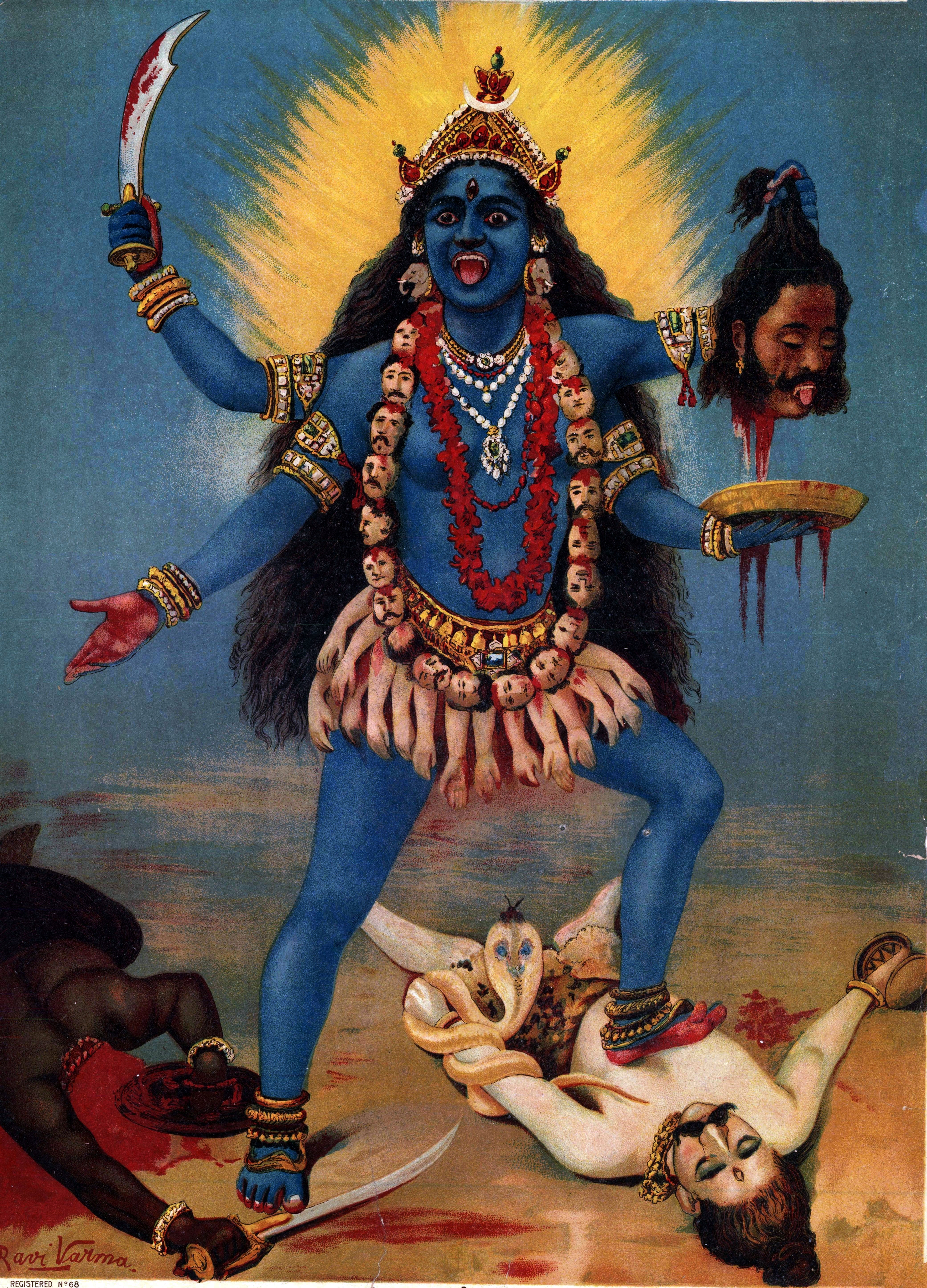
Illustration of Kali
Source: Wikipedia
For this part, I watched the three videos of Kali's secrets. This was difficult to keep up with, specifically the first video, because of all the Kali'like goddesses and stories. I got confused which stories were actually Kali's and which were similar to her, or ones they are unsure about.

Kali sounds really great to me. She doesn't care about humanity, which is very me more and more every day. She is going to do what nature declares she should, and society can't scare her off.

The most interesting part to me that I would like to learn more about is the Kali encounters. The video mentions a writer who encountered Kali and this encounter inspired him to become a writer of beautiful poetry. I don't associate ancient poetry as something that doesn't care about humanity. Most poets care about nature in how it relates to humans. Also, i would like to meet Kali as long as she doesn't kill me.


Gaia's Secrets: Pattanaik, Seven Secrets of the Goddesses 2016

Wednesday, May 2, 2018

Reading Week 15: 7 Secrets of the Goddesses, Part B

Mask of Agamemnon
Wikipedia

Part 3 of this first chapter of videos, Gaia's Secret, discusses how obedience became the most important value of a woman and that she was dehumanized to no longer be a human, but the symbol of a man's (whomever she belonged to) honor. I think the best example the video gives is of the story of Agamemnon, his wife, and their son. The wife kills Agamemnon and his mistress when she finds them together. In revenge, the son kills the mother. Athena, goddess of wisdom, saves him from the furies and says what he did was right. Matricide is ok in this patriarchal society because the mother belongs to the man of the house (her son) who must keep his women obedient before the ties of family or justice. 

In the fourth video, the author describes how mythologies and religions around the world lack strong, important feminine characters. Often, if women are at all included, they are delicate or a punishment. The author talked about how Buddha refused to allow women into the monastic orders. he only began to consider it when he saw his mother cry at the death of his father. It took him watching his mother crying to realize that women have emotions too... some wise man he was. I don't want to offend anyone, and every religion has problematic views of women, but this story of how Buddha didn't not see women as people with feelings for too long was very striking to me. 

Gaia's Secrets: Pattanaik, Seven Secrets of the Goddesses 2016

Week 12 Reading: 7 Secrets of the Goddesses, Part B

These videos were a little hard to follow at first. Not because I wasn't reading, they thankfully had many of the lines on the screen and spoke at a pace that this visual learner could keep up with. However, they had so many different points to make and used so many different stories from around the ancient world to make these points that it got confusing. I found myself thinking "Ok we are in India. No wait, we're talking about Persia now. Wait, Greece was matriarchal? I don't think that's true... dang it I missed something about Nepal!" I had to watch the first half of the first video twice just to get into the swing of things.

These first two stories highlighted the role of gender in ancient societies (into the 19th century) and how that was represented in stories of goddesses. the first video talked about how these women had agency of their body. They could go from man to man freely and chose their lovers. There was really no reproductive need for a less than perfect man, but women are necessary for reproduction.

Image result for deukis nepal
Nepali Women
Wikipedia
However the second video showed how that was turned on its head when people were settling down, planting farms and men took over everything. All women had left was their bodies and sex. The story talked about how women became whores which went from something positive and liberating to a pejorative term. Marriage laws were enacted to keep women's number of lover restricted to 4 or as little as one, her husband. The choice and liberation of the early human civilizations were being stripped from women.

The story I found the most unsettling was the story of the Nepali girls who were "sacred": deukis. Men could sleep with them to be "cured" of illnesses. It reminded me of the Vestal Virgins, but instead of remaining chaste to be sacred, these women are forced to have sex because they are sacred.

Gaia's Secrets: Pattanaik, Seven Secrets of the Goddesses 2016
Reading Week 15: The Indian Storybook, Part A

My favorite story between the Sacred Cow and the Richyashringa was the Sacred Cow story. I liked the theme of too much good being a bad thing. the king was too generous and kind that the peace was too much, he needed an army. He needed to beat someone up. The king was depressed and so a goddess filled his life with laughter, but too much laughter becomes a source of "woe". 
Image result for sacred cow
A very ugly cow
flickr

I think that it is to say the only person deserving of a cow that can provide for all your needs is a sage hermit. No one, especially no one with power such as a king, should have a sacred cow, it would be too much good. 


The Sacred Cow. Wilson. Indian Story Book (1914). 

Sunday, April 29, 2018

Week 14 Extra Reading: Tales of Ancient India: Krishna and the Gods, Part A

File:God krishna.jpg
Baby Krishna
Source: Wikimedia
I think it's interesting how in traditional stories, there is always a prophecy so that an evil being wants to kill the child. We see it with Krishna, Zues, Jesus, and I'm sure so many others that are simply not coming to mind. Because of these situations, innocents always suffer. I think it is interesting though how the baby girl is almost killed in Krishna's place, but is saved at the last moment. Krishna's parents were willing to kill an innocent baby for their own child. Yes, Krishna is a god, but they made that judgment call to have an innocent killed because of them and their son.

What if she hadn't flown up into the air? How does Krishna feel that he was a totally aware an capable being (he told his parents where to take him), but he let innocent children die in his place? For Zeus, his brothers and sisters were alive and able to be saved. For Jesus, the New Testament god is a pretty hands off guy. It would be uncharacteristic and seemingly against the code of free will if he waved a hand and all the children killed in Jesus' place were saved. However, the Indian gods are always interfering, and yet the story says Kans was killing children to try and stop Krishna.

Krishna's Birth. Cox. Tales of Ancient India: Krishna and the Indian Gods(1891)

Thursday, April 26, 2018

Week 14 Reading Notes: 9 Ideal Indian Women, Part A

This story from the beginning felt like such a classic. It felt a fairy tale I already knew and yet I had never read it and wasn't sure what to expect at the end.
File:La barca de Caront, Josep Benlliure Gil, Museu de Belles Arts de València.jpg
Charon ferrying the dead to the underworld
Source: Wikimedia

I think it is powerful Savitri's love for her husband, but I wanted to know why they loved each other other than beauty. She was willing to give her life for this man she had known not even a year. I want to know more about them.

I loved the note at the end about women taking this oath. I think being widowed, especially when you have been married for a long time, would be so difficult. When I think of it in the context of Savritri's story, the oath they take seems very romantic instead of a convenience. I would like to write a story about how this oath might play out if it worked, but something went horribly wrong.

Devee. Nine Ideal Indian Women. (1919)

Wednesday, April 18, 2018

Reading Notes Week 13: Twenty Jatakas Tales, Part B

Of all the jatakas I've, read, I thought the Great Elephant was by far the most powerful story. I don't think it's so much the sacrifice itself, but how immediate it was and for men he had only just met.

Image result for elephant
Image of an elephant.
Source: Wikipedia
I don't know if it was easier because or more meaningful because he had had such an easy life before that. For example, he had never shed tears before he met those men. On one hand, this sadness that was new to him was so profound and he could so quickly empathize with these strangers, and he threw himself off a mountain.

On the other hand, he had never known any sadness, so of course this sadness would be profound. He had nothing to compare it to you. At such a profound sadness that is made all the more powerful because it is the first negative emotion ever felt, he of course acted on it. Perhaps it was part sacrifice, but also part "who knew this world was so cruel, I would rather not live in it while also helping others." I can see how an elephant who thought the world was perfect would be shattered after having such a pristine bubble of a worldview popped.

Inayat. The Great Elephant, Twenty Jataka Tales (1939)

Reading Notes Week 13: Inayat Twenty Jataka Tales

I think that this is an interesting example of how the human world interacts with the animal world in the Jataka Tales. So in this jataka, the swans all have their own kingdom in a lake while they can talk to humans. 
Image result for swan
Image of Swan
Source: Wikimedia

I think it is interesting that this king wants to see this swan so badly, and then has no evil ulterior motive. I think that stories normally when brahmin are not involved, the king would then want to skin them or keep them caged, especially if he "thirsted" for the swan. 
If I rewrote this story, I would want to reverse who wants whom. I think that the swan would want to see a great human king so that he could rule over the earth the way humans do. I think the abduction scene could be really fun to write!


Inayat. The Swan Kingdom,Twenty Jataka Tales (1939)

Wednesday, April 11, 2018

Reading Notes Week 12: Sacred Tales of India, Part A

Image result for lahana snakes
Image of snake
Source: Pinterest
In the story of Lahana and her interaction with the deities disguised as fish and then in the form of snakes, I think it is amazing how she recognizes the magic and is then unafraid of snakes. I think it is pretty normal to be afraid of snakes, and yet she is rewarded for this and becomes a princess all because she was willing to feed these random snakes that she believed to be magic. I think it would be funny if she went to all this trouble only for these snakes to be normal snakes after all!

Sacred Tales of India. Dwijendra Nath Neogi (1916)


Thursday, March 29, 2018

Reading Notes: Jatakas Tales, Part B

I liked the story of the Princes and the Water-Sprite, but I also had to reread it several times and still didn't understand it.

Image result for cave
Image of cave.
Source: flickr
When asked which brother the eldest wants to save, he says the younger one because it's due to him their father sent them away, he couldn't go with the middle brother and leave the youngest. What?? The middle brother is innocent and was forced to leave his home because the king feared for his life because of his own mother! Why should he be left to die in that cave? And the water-sprite says that's the kind, good answer? How does that make any sense? Maybe I'm just missing something obvious, but I don't believe that this answer was good at all. I think an equally bizarre answer but more kind would be to say he won't take either so that they can keep each other company and neither has to be alone. While an equally terrible situation, this at least doesn't punish innocent people in the same way. Although I think the best answer is to save the middle brother since he did nothing wrong.

Jataka Tales by Ellen Babbitt. (1912)

Wednesday, March 28, 2018

Reading Notes Week 10: Jataka Tales, Part A

I like the stories of characters cleverly outwitting their enemy, but the turtle story was my favorite. I think it's hilarious that he didn't even have to do anything. They just didn't know anything about turtles and instead of learning about what they feared which would have allowed them to know that the water is his home, they just went off of assumptions and the turtle could take advantage of their ignorance.

Image result for ignorance
Poster from March for Science
Source: Wikimedia
Jataka Tales by Ellen Babbitt. (1912)

Thursday, March 1, 2018

Reading Notes: Mahabharata Part D

Image result for moses idols
Moses destroying the 10 Commandements
when he discovers the sins of the Hebrews.
Source: Wikipedia
The story of Krishna's death reminds me of the story of Moses, when he goes up on Mount Sinai and returns to find the Hebrews drunk and sacrificing to idols.

Krishna tells the people to not drink wine, and yet they get drunk. When Krishna removes himself from them, that is when he is shot He tried to avoid the result of what the omens were predicting, but he was unable to avoid his fate.

This section of the story is kind of all over the place, and there is a lack of connections between events. Or at least the connection and flow of the story is not evident. For example, where did the horrible woman with yellow teeth come from and where did she go? Why did they then go feast on the seashore after they have been robbed? I would like to explore the horrible woman's story and understand how she plays into the big picture.

The Death of Krishna. Indian Myth and Legend by Donald A. Mackenzie (1913).

Wednesday, February 28, 2018

Mahabharata Part C: Draupadi

Death of Prince Kichaka
Source: Wikipedia

Something that bothers me about the Mahabharata is how little women do and the lack of butt-kicking done by women. For example, from part A when Amba wants to kill Bhishma, but must become a man to do so in a another life.

Draupadi is taken by Jayadratha. She is saved from her abductor.

She is then attacked by Prince Kichaka and all she can do is get away.

I don't believe that she would have had such a horrible abduction experience at the hands of Jayadratha, be surrounded by warriors and weapons, and have not learned any form of self-defense.

If I was Draupadi and I was being forced to live with people I don't care about, live out in the woods in exile, and I keep getting attacked by men, I would be so angry. I think that she would be so frustrated with her situation that she wouldn't remain a meek damsel-in-distress. She would do something about it so that she could defend herself!

Bhima and Kichaka. The Indian Heroes by C. A. Kincaid (1921). 

Thursday, February 22, 2018

Reading Notes: Mahabharata, Part A

Image result for bhishma
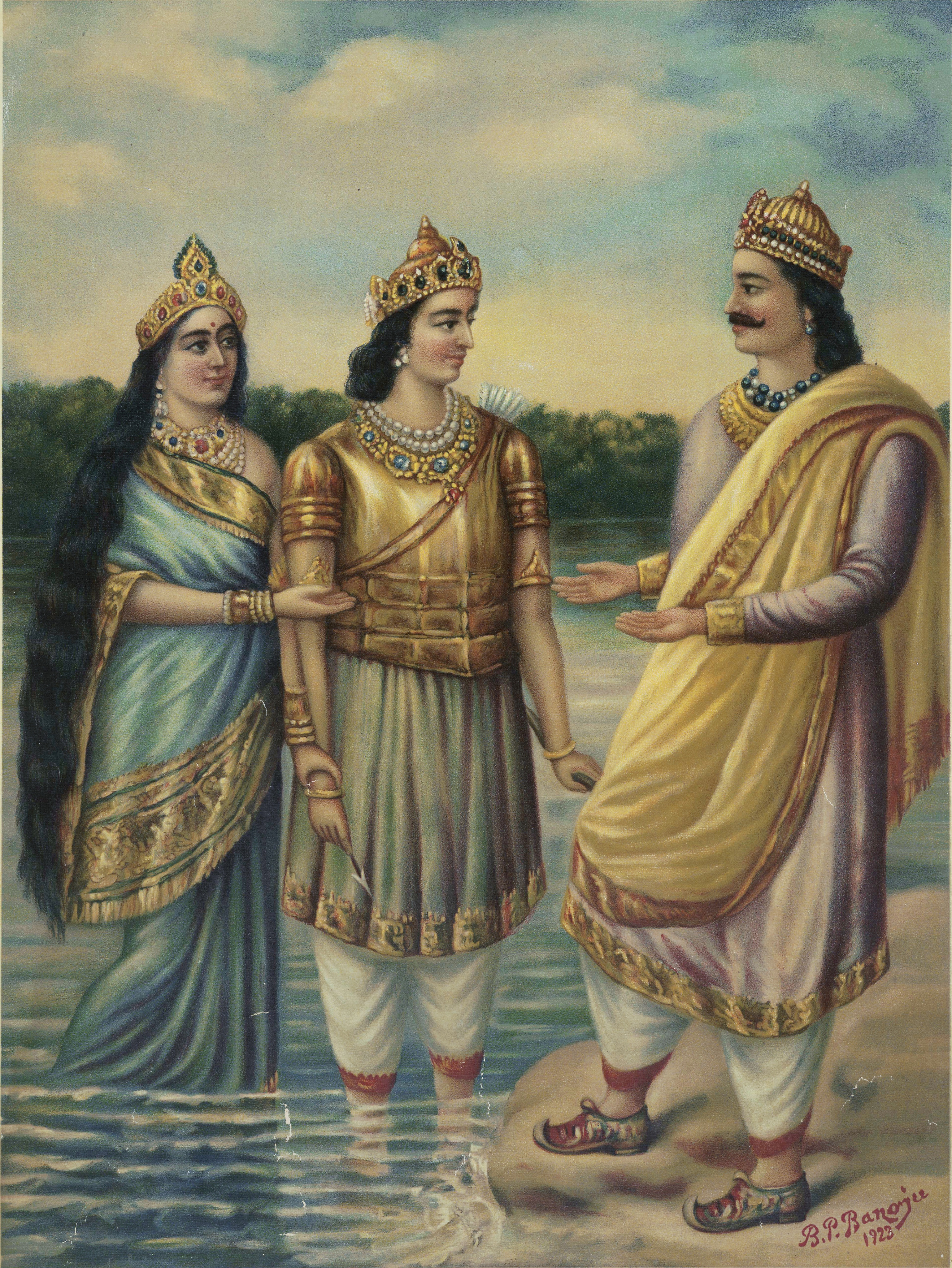
1923 Lithograph: The presentation of Devavrata
Soure: Wikimedia
I think that Satyavati and Bhishma have the two most interesting stories here. 

  • When it says that Satyavati became mother of a son, it does not discuss how she remained a virgin as he promised and still gave birth. At first I thought maybe it was another "miraculous birth", but then it mentions her having to become a virgin again?
    • Who exactly was the father and why would he leave such a beautiful woman everyone is obsessed with?
  • Bhishma's vow is very powerful
    • He sacrifices everything, his entire future, so that the king can marry the woman he wants. 
    • I am fascinated by sacrifices and vows like his so perhaps I can incorporate this into the story about Satyavati's first love/ father of her first child. 

Mahabharata Indian Myth and Legend by Donald A. Mackenzie (1913).


Wednesday, February 7, 2018

Reading Notes: Ramayana, Part C

  • Younger brother claims to have done everything innocently
  • Two brothers are chasing after a creature and older brother goes into a cave. younger brother is told to wait outside at the mouth of the cave.
  • Younger brother sees the blood of the creature and believes the older brother is dead
    • He covers the opening of the cave and the older brother can't leave 
  • The younger brother goes to take the kingdom 
  • The older brother comes back, takes the kingdom and the younger brother's wife. 
I don't know if I believe he would have sealed off the cave with zero confirmation that his brother was dead. There has to be more to his reasoning. 

Sugriva's Story. Rama and the Monkeys by Geraldine Hodgson (1903).
Image result for two monkeys
Two monkeys fighting Source: flickr

Famous Last Words: Peace Out Homies

Once I turn in this assignment, I will be done with this class. And then I'll only have one thesis and one final exam. And then I'll...